

Metal Parts Shipping: Sea Freight vs Air Freight
Metal parts shipping has two real options, and the choice is made before the container is booked. Sea moves the cost down. Air moves the date up. Metal is dense, and that one fact tilts both sides more than any rate table shows. Our export company registered in December 2022. It ships from the Nanpi factory that has produced since 1999. This guide compares the two routes on cost, speed and the metal-specific catch. Then it shows the split strategy that saves most orders. The stage-by-stage version of the clock is in our post on metal parts lead time.
Sea Freight: The Default for Metal
- Transit: typically 3-6 weeks, port to port, by route.
- Cost: priced per container, so it falls with the load.
- Volume: a 20-foot holds roughly 28 cubic meters, a 40-foot about 67.
- Best for: production runs, reorder quantities, heavy parts.
Sea wins because metal is heavy and cheap per cubic meter. You pay for the box, not the kilos. A full container of stamped brackets costs a fraction of the same brackets by air. The price you get is the schedule: the vessel leaves when the vessel leaves. Plan the order backwards from your line date, and the sea leg is the first number you subtract.
Air Freight: When the Line Stops
- Transit: typically 3-7 days door to door.
- Cost: priced per kilo, and metal weighs what it weighs.
- Best for: line-stop spares, urgent rework, first-time customers with a fixed launch.
- The catch: density. A ton of sheet on the pallet is a ton of air invoice.
Air is not a cheaper sea. It is a different instrument. You buy the days back, and the invoice is per kilogram, no container discount. A 500-kilo lot of small parts can cost more by air than the sea leg of a full container. The question is not the price of the freight. It is the price of the stopped line, and whether the freight is smaller than that number. If it is, air is the cheap option that day.
Side by Side
| Factor | Sea | Air |
|---|---|---|
| Transit, typical | 3-6 weeks | 3-7 days |
| Price basis | Per container | Per kilo |
| Dense metal | Cheap per kilo | Expensive per kilo |
| Minimum load | Container or shared space | A pallet |
| Schedule certainty | Vessel dependent | Flight dependent |
| Best order size | Hundreds to thousands | Urgent, small, critical |
Read the price basis row twice. It is the whole argument. Sea divides the cost by the container; air multiplies it by the weight. Metal, being dense, sits at the far end of both equations. The part that is light on the drawing can be heavy on the invoice.
Container Math, Before You Book
How many boxes fit is a packing question first. The pallet count, the stack height and the dunnage set the real number, not the box size on the drawing. We work it at the quote stage: parts per carton, cartons per pallet, pallets per container. The packing plan is agreed before production, so the container is planned before the first hit. The layers, the straps and the photo record are in our post on metal parts packaging. If the answer is “half a container”, say so at the quote. Half a container has its own price, and it is not half the container price.
The Split Strategy
Most urgent orders are two orders in one. A small first lot flies to keep the line moving. The full production lot sails behind it, at the sea price. The air lot is sized to the stoppage, not to the project. When the sea lot lands, the stock that was bought with urgency becomes normal stock. Our answer on batch shipping covers the same logic from the production side. Release the finished boxes as they finish. Do not hold them for one date. The two strategies meet in the middle, and the middle is where the money is.
Terms and Documents, per Route
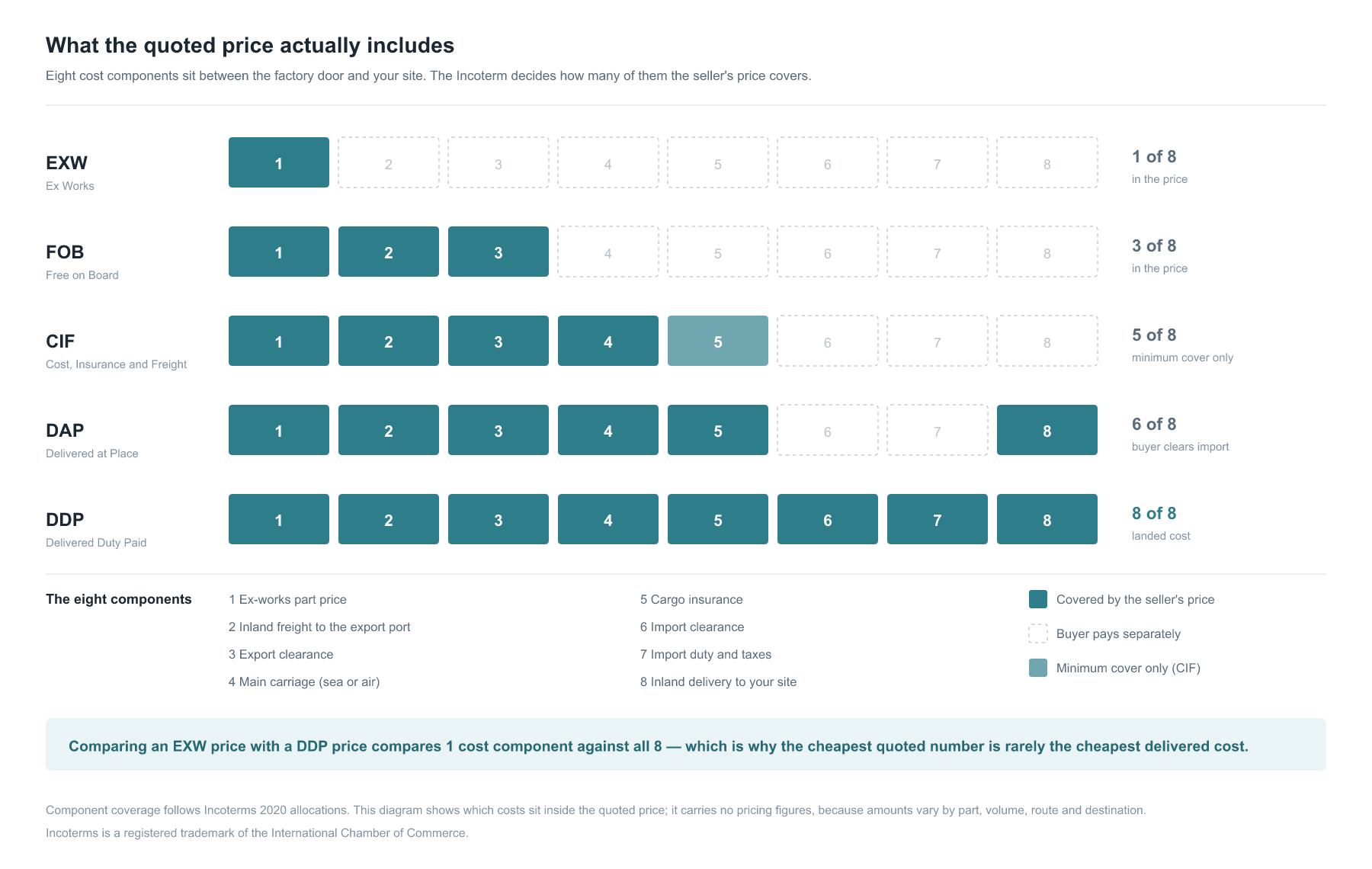
- The term: FOB, DDP or the one your broker names, stated in the quote.
- Sea: bill of lading, packing list, material certificates, loading photos.
- Air: air waybill, the same packing and certificate set, weight verified.
- Both: the document set travels with the goods, in one file per order.
The term decides where your cost starts and ours ends, on either route. The differences are in our post on FOB vs DDP. The full document list, sea and air, is in which shipping documents we provide. Keep one file per order. Claims, audits and reorders all run on it.
What We Book, in Practice
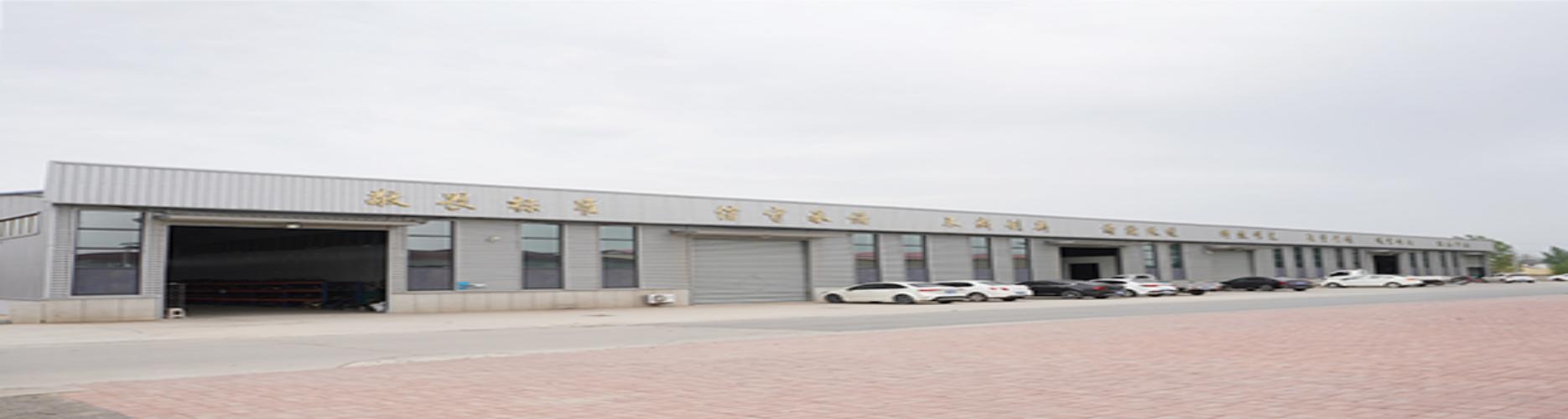
Our export desk books both routes, from the same Nanpi factory floor. Cangzhou Xinjiuxinji Import And Export is ISO 9001:2015 certified, certificate number ZTZL28025Q1049R0S. TüV Rheinland has verified the factory onsite. The booking is a written stage of the order, with a date, like every other stage. When the route is uncertain, we quote both. They sit in the same document, so the decision is a subtraction, not a guess. That is how metal parts shipping should be planned: the numbers first, the vessel second.
Frequently Asked Questions
How long is sea freight from China to Europe or the US?
Typically 3-6 weeks port to port, by route. US west coast is the short end; Europe and the US east coast sit in the middle. The quote names the route and the window, in writing.
How much is air freight for metal parts?
It is priced per kilo, and metal is dense, so the invoice follows the weight. We quote it next to the sea number, on the same document, so the choice is a subtraction.
Can one order use both sea and air?
Yes, and it is the standard answer to an urgent date. A small lot flies to keep the line moving; the full lot sails behind it at the sea price. The split is sized to the stoppage.
Who books the carrier?
Our export desk books it as a written stage of the order, under the term you chose. The booking date and the vessel or flight sit in the same date plan as production.
What is the cheapest way to ship metal parts?
Sea, almost always, for anything beyond a small urgent lot. The container divides the cost; the kilograms do not. The exception is the stopped line, which makes air the cheaper number that day.
Quote Both Routes in One Document
Send your part list — we quote sea and air together.
WhatsApp: +86 132 1225 5906 | Email: bob@xinjiuxinji.com
Or contact us online.
Metal Parts Warranty: What to Ask Before You Order
More Like This
-
-
-