

DDP vs DAP for metal part imports
Most buyers meet the ddp vs dap question the first time a supplier quotes a delivered price. Both terms put the goods at your door. However, they split the import paperwork in opposite ways. Under DDP the seller clears the goods for import. The seller also pays the duty. Under DAP the buyer does both. Therefore that single difference decides who carries the customs risk.
The short answer
| Point | DAP | DDP |
|---|---|---|
| Who arranges the main carriage. | The seller. | The seller. |
| Who clears export. | The seller. | The seller. |
| Who clears import. | The buyer. | The seller. |
| Who pays the import duty and taxes. | The buyer. | The seller. |
| Who unloads at the destination. | The buyer. | The buyer. |
| Where risk passes. | On arrival, ready for unloading, at the named place. | On arrival, cleared for import, at the named place. |
| Best fit. | A buyer with its own customs broker and duty account. | A buyer that wants one landed price and no customs work. |
Why the two terms look identical but are not
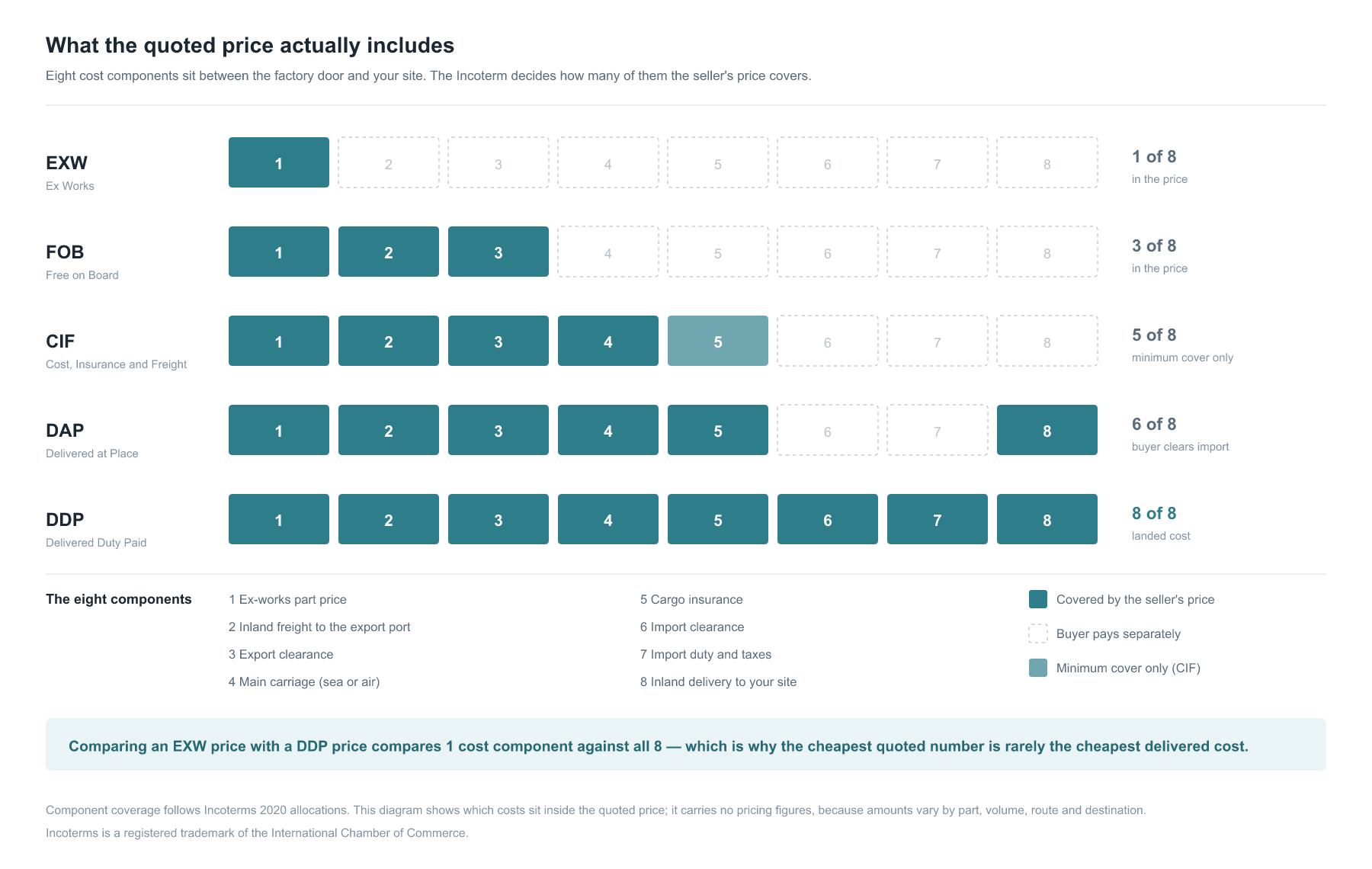
In fact, DAP and DDP share nine letters and most of their obligations. Both also put the seller in charge of packing, export clearance and the main carriage. Both deliver to a named place rather than to a port. Therefore the difference sits in one place: the import border.
Under DAP the buyer completes the import formalities and pays the duty. Under DDP the seller does. That is the whole distinction. It is also the one that decides which party needs a customs registration in the destination country.
Who clears customs, and why that matters more than the price
However, import clearance is not a formality you can leave to chance. It needs a party with a local tax identity, a duty account and a broker. Some sellers hold those in the destination country. Yet many do not. Therefore a DDP quote from a seller without them is either subcontracted or not really DDP.
This is where most disputes start. A buyer accepts a DDP price, then finds the carrier asking for duty on delivery. The DHL Incoterms and customs guide makes the split explicit. Under DAP the buyer handles import duties. Under DDP the seller carries them. Therefore ask which party holds the duty account before you sign, not after the goods land.
Where risk actually passes
In short, risk moves at delivery, not at a port. Under both terms the seller carries the goods to the named place. Then risk passes. However, the condition on arrival differs. Under DAP the goods arrive ready for unloading. Under DDP they arrive cleared for import as well.
The ICC Incoterms 2020 rules set out eleven terms and define who carries cost and risk at each stage. Costs sit together in article A9/B9 of each rule, so you can read the full cost list in one place. In practice, that is the fastest way to compare two terms.
Unloading and the DAP trap
Under DAP the buyer unloads. That sounds minor until a heavy crate arrives. If unloading needs a forklift and the driver will not touch the pallet, the buyer pays for the delay. Therefore confirm the unloading method with the forwarder before the shipment sails.
However, under DDP the buyer still unloads. That part does not change with the duty arrangement. Therefore treat unloading as a separate question for both terms.
Which term suits a metal parts order
In short, the answer follows the customs question, not the freight question. Choose DAP when you already hold a customs registration, you have a broker, and you want to control the duty entry yourself. Many importers do, because it lets them recover duty cleanly.
Choose DDP when you want one landed figure and no customs work at all. That works well for a first trial order or a small repeat run. Therefore ask the supplier to confirm, in writing, that it will clear import and pay the duty. A supplier that cannot clear import cannot deliver DDP.
Nevertheless, agree the term in the quotation and in the contract. Name the place precisely. “DDP” alone is not enough, because the named place decides where the seller’s obligation ends. For the wider comparison of delivery terms on metal parts, see how DDP differs from FOB and DAP on the same production base.
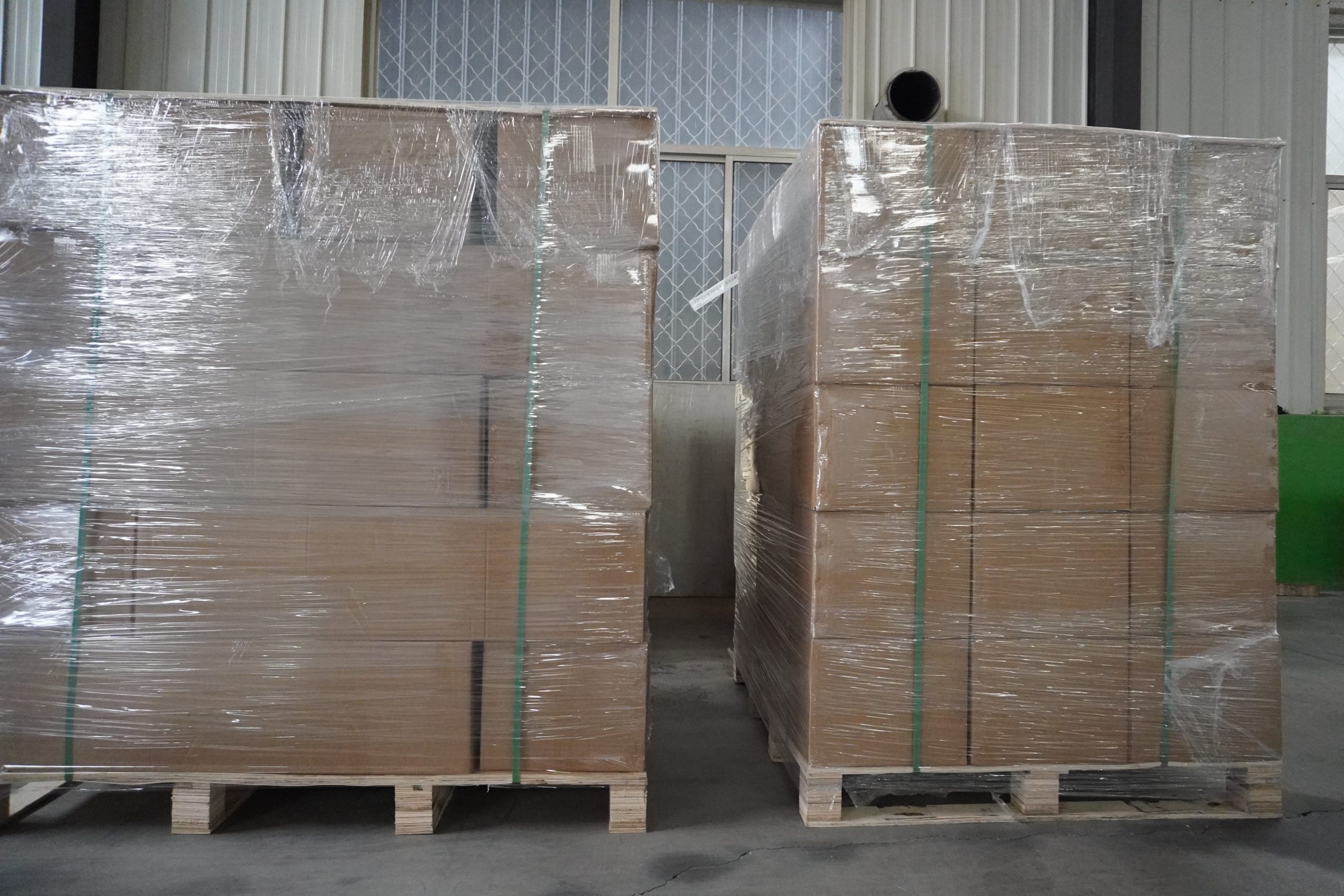
We produce and export metal parts from Nanpi, Hebei. Our export service answers with a quote within 8 hours, free samples leave a dedicated sample line within 72 hours, and most orders ship within 2 to 4 weeks after approval. Monthly capacity runs above 500,000 pieces, so a first DDP trial and a repeat run leave the same line.
Frequently asked questions
These are the questions buyers ask most often about this comparison.
Does DDP mean the seller pays the import duty?
Yes. Under DDP the seller clears the goods for import and pays the duty and taxes. Under DAP the buyer handles import clearance and pays the duty instead.
Which is cheaper for the buyer, DDP or DAP?
It depends on who can clear customs more efficiently. DDP removes the work from the buyer but the seller carries the risk, so the price reflects that. A buyer with its own broker often stays on DAP and controls the duty entry directly.
Who unloads the goods under DDP and DAP?
The buyer unloads under both. That part of the obligation does not change with the duty arrangement, so confirm the unloading method with the forwarder before shipping.
Can you ship metal parts DDP to our country?
It depends on whether we can clear import in that market. Ask us with the destination country, and we will confirm the term we can deliver and the place we can name.
More Like This
-
-
-