

Metal Parts Payment Terms: T/T, L/C and Red Flags
Metal parts payment terms decide how much risk each side carries. In this trade, the standard is T/T with a deposit. L/C appears on larger orders. Getting the terms wrong can stall steel, tooling, and shipment. Our export company was registered in December 2022. It holds an 80%+ reorder rate across all channels. This guide explains the terms, the logic behind them, and the red flags to avoid.
The Terms You Will Meet
| Term | How it works | Typical use |
|---|---|---|
| T/T 30/70 | 30% deposit, 70% before shipment | Standard production orders |
| L/C | Bank pays on document presentation | Large or first orders |
| T/T 100% prepay | Full amount before production | Rare; small urgent orders |
| Sample payment | Small fixed amount or card | Prototypes and first articles |
T/T is the standard term we list, and most orders we handle are T/T 30/70. It is simple, fast, and protects both sides. Terms are settled before steel moves. Nothing in the factory starts on a handshake. Every other term is a variation on this base.
What the Deposit Actually Unlocks
- Steel purchase: sheet is ordered the week your deposit lands.
- Tooling start: die cutting begins after the deposit clears.
- Capacity hold: your job is reserved on our press schedule.
Your deposit does not sit in a bank. It moves materials and machine time. That is why we do not start production before it clears. The deposit also covers the engineering time to set up your job. Steel prices move between orders. A deposit locked early also locks your material price window. It also sets the clock — see our standard lead time post for what happens after.
L/C: When It Makes Sense
- Large orders where the buyer needs bank-backed protection.
- First orders placed with a new supplier.
- Markets with tight import control rules.
The bank checks documents, not parts. That is why document discipline is part of quality. We accept L/C for qualified larger orders. L/C adds bank fees on both sides. It is worth it when the order value justifies the cost. We keep the documents clean: commercial invoice, packing list, bill of lading, and our material certificates.
Balance and Shipment
- Balance is due after final QC, before the vessel is booked.
- We photograph and report QC before asking for balance. The report carries photos and measurements, not just a statement.
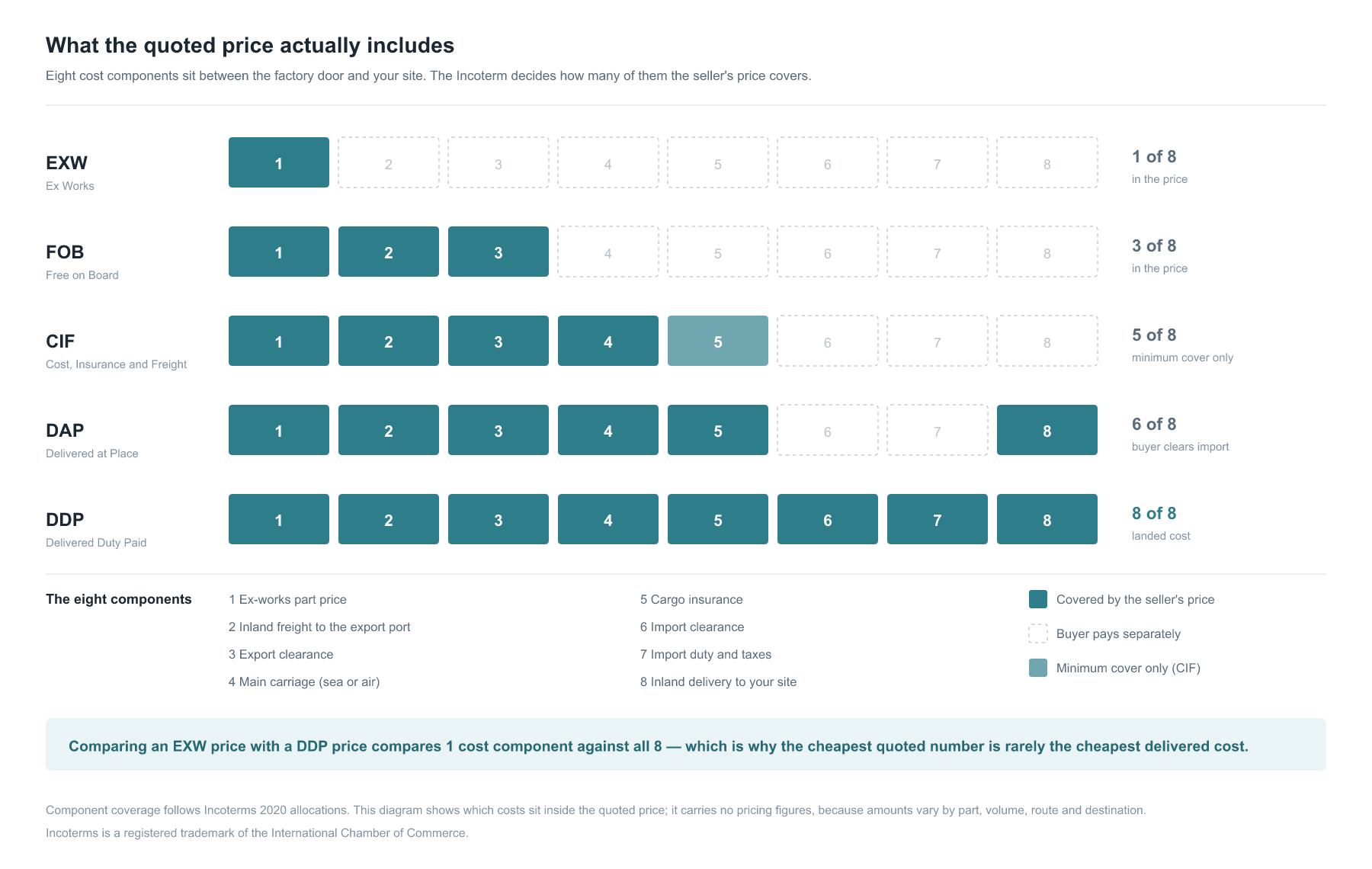
- Shipment happens on the Incoterm you choose.
Payment, quality check, and shipment are three separate gates. Book the vessel early in the week, since carriers cut paperwork a day or two before sailing. Our shipping and Incoterms page explains each one.
Six Red Flags in Payment Requests
- 1. 100% prepayment demanded on a first, large order.
- 2. Pressure to move payment off the contract terms.
- 3. Balance requested before QC results are shown.
- 4. Bank details that change between emails.
- 5. No proforma invoice or contract to sign.
- 6. Refusal to split tooling and unit price in writing.
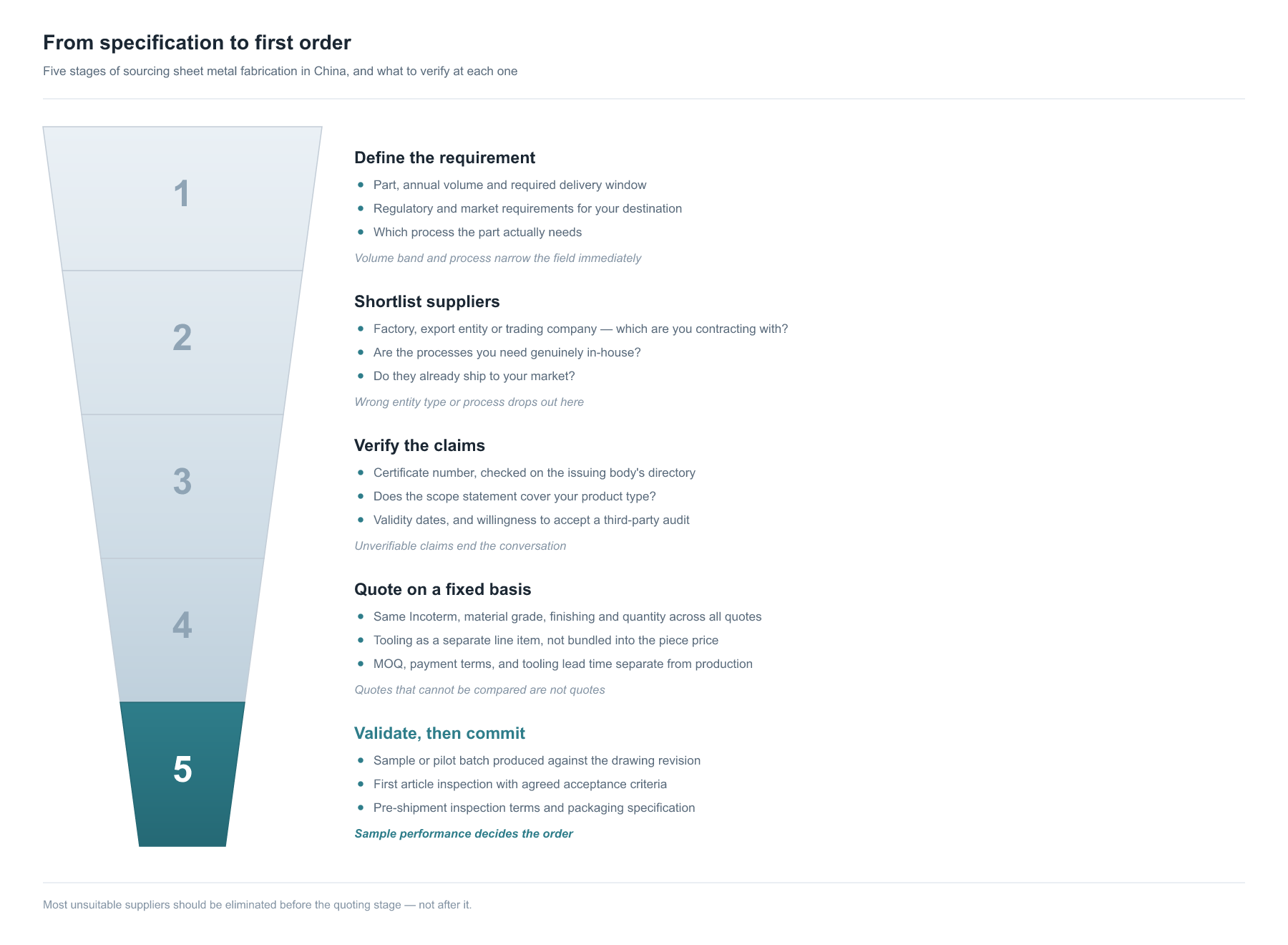
The flags below come from real orders we have reviewed. They are the ones that recur. None of these is automatically fraud. Each one means: slow down and verify. Our guide on verifying a sheet metal supplier walks through the checks.
Documents for Every Payment
- Proforma invoice: the price and terms before you pay.
- Sales contract: ownership, tolerance, and penalty clauses.
- Commercial invoice: the document the bank checks.
- Packing list: what is in the carton, by weight.
- Bill of lading: proof the goods are on the vessel.
Keep one file per order with all five inside. It makes claims, refunds, and audits painless. Lose a document and the bank rejects the shipment. A rejected shipment stops the release of goods at your port.
Currency and Fees
- Quote and pay in one currency, named in the contract.
- State who bears bank charges: our side, your side, or shared.
- Fix the exchange window if the order spans months.
- Keep every transfer reference tied to the invoice number.
Currency surprises are quiet. They appear as a small line in the final invoice, not as a headline. Name the currency and the fee split in the contract, and the surprise disappears.
What We Ask and Why
- 30% T/T deposit to start the order.
- 70% balance after QC photos and report.
- Tooling, if any, invoiced on its own line.
- L/C for qualified large orders.
Cangzhou Xinjiuxinji Import And Export is ISO 9001:2015 certified. TüV Rheinland has verified our factory onsite. Our terms are written into the contract before any steel moves. Every payment is traceable to a contract line. That is the whole point of writing terms down. We will tell you the exact total before you pay the deposit. The figure in the proforma invoice is the figure in the contract. Clear terms are a feature, not a formality.
Frequently Asked Questions
What are standard payment terms for metal parts?
T/T with a 30% deposit and 70% balance before shipment is the standard. L/C is used on larger or first orders.
Why is a deposit required?
The deposit purchases steel and starts tooling. It also reserves press time. Production does not start before it clears.
Can we pay by L/C?
Yes, for qualified large orders, we accept L/C. Bank fees apply on both sides. We prepare clean shipping documents for presentation.
When is the balance due?
After final QC. We send photos and a report. Shipment is booked only after the balance clears.
Do you accept 100% prepayment?
Rarely, and only for small or urgent orders. For production volume, split terms protect both sides better.
Safe Terms, in Writing
Clear payment terms, in writing — start your order safely.
WhatsApp: +86 132 1225 5906 | Email: bob@xinjiuxinji.com
Or contact us online.
More Like This
-

-
-